
Fire & Ice: The Strange Science of Yellowstone’s Winter Geyser Basins
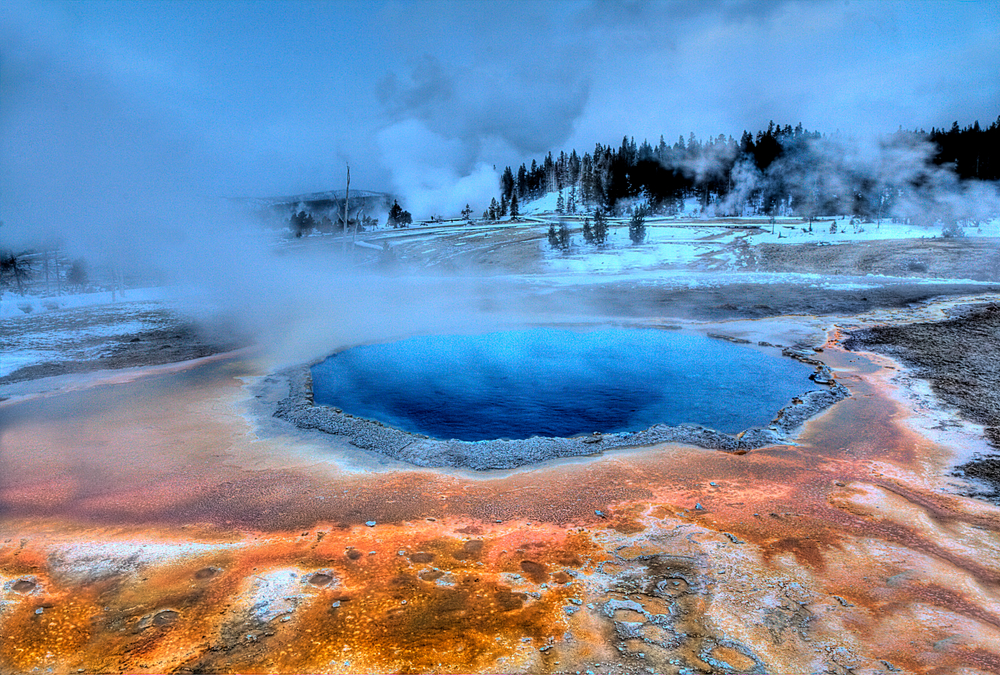
Yellowstone National Park in winter is a place of paradoxes. Beneath blankets of snow and ice, volcanic heat stirs restlessly. Steam rises in thick plumes from geysers and hot springs, drifting into a world locked in sub-zero temperatures. The result is a surreal landscape where fire meets ice, giving rise to unique phenomena and life forms. The winter geyser basins of Yellowstone are not just visually stunning; they are scientific marvels, providing rare insights into hydrothermal winter biology, extremophiles in snow, and the complex interactions between geothermal energy and Arctic-like cold.
Ghost Trees and the Sculptures of Rime Ice
One of the most haunting and beautiful sights in Yellowstone’s winter basins is the presence of “ghost trees.” These are trees coated in thick rime ice, an effect created when steam from nearby geysers condenses on branches and freezes instantly in the frigid air. This icy build-up occurs layer by layer, giving the trees a frosty, almost spectral appearance. The term ghost trees (rime ice) captures both their physical appearance and the ethereal ambiance they lend to the geyser basins.
Rime ice is different from hoarfrost. It forms when water droplets in fog or steam freeze on contact with cold surfaces. In the geyser basins, the steam rising from hot pools and geysers collides with air often colder than -20 degrees Fahrenheit. When that steam settles on nearby pine trees or dead standing trunks, it creates icy shapes that are continually rebuilt and reshaped by wind and temperature fluctuations.
These ghost trees are not just artistic natural sculptures. They represent the dynamic tension between Yellowstone’s geothermal activity and the harsh mountain climate. The presence of rime ice also indicates microclimates around hot springs where warmth and moisture meet icy stillness, creating ecological niches unlike any other on Earth.
The Hidden World of Hydrothermal Winter Biology
While most people associate Yellowstone with hibernating bears or migrating elk, few realize that beneath the snow-covered surface lies an active biological world. The geyser basins remain warm all winter due to underlying volcanic heat, and this warmth supports a variety of cold-resistant life forms. Hydrothermal winter biology refers to the study of ecosystems that persist and even thrive in these extreme winter conditions.
Algae and bacteria inhabit the edges of hot springs and runoff channels, forming brightly colored mats that remain active even when the surrounding landscape is locked in ice. These microorganisms rely on heat and chemical nutrients from the geothermal water, enabling them to photosynthesize and reproduce in the dead of winter. Their activity can be seen in the vibrant oranges, greens, and reds that streak the snow-covered ground around steaming pools.
Larger organisms also benefit from these warm zones. Insects such as midges and crane flies can sometimes be found fluttering near hot springs. Some species of amphibians have been known to overwinter in thermal areas, taking refuge in the relatively warm waters. The heat creates microhabitats that offer food and shelter when the rest of Yellowstone is inhospitable.
These winter-active biological systems are a testament to nature’s adaptability. They also serve as living laboratories, allowing researchers to study how life might exist in similarly extreme environments elsewhere in the solar system.
Extremophiles in Snow: Surviving the Icy Inferno
Perhaps the most fascinating organisms in Yellowstone’s winter geyser basins are extremophiles, microbes that thrive in conditions that would be lethal to most forms of life. Some of these extremophiles in snow can endure both high temperatures and freezing cold, a dual challenge that has fascinated scientists for decades.
In the runoff channels of geysers, temperatures can range from boiling at the source to freezing just a few feet away. Within this narrow gradient, thermophilic (heat-loving) and psychrophilic (cold-loving) microbes form distinct zones. Some extremophiles have adapted to tolerate rapid shifts in temperature, while others have evolved to colonize the warm margins of ice patches, feeding off minerals and organic materials carried in the geothermal flow.
Cyanobacteria, for instance, form colorful mats in these thermal runoff areas. These microorganisms are not only heat-tolerant, they can also perform photosynthesis in very low light conditions, which is crucial during Yellowstone’s short winter days. Some of these microbial communities even produce their own anti-freeze proteins to survive when night temperatures plummet.
This blend of volcanic heat and winter cold provides an unparalleled natural testing ground for studying the limits of life. These findings have implications far beyond Yellowstone. By understanding how extremophiles survive in such conditions, scientists can better hypothesize what life might look like on icy moons like Europa or Enceladus, where subsurface heat interacts with frozen crusts.
Volcanic Heat vs. Sub-Zero Air: The Dance of Opposites
Yellowstone in winter is essentially a stage for the battle between fire and ice. Volcanic heat seeps up from deep within the Earth, driven by the enormous magma chamber that lies beneath the park. This heat escapes through fumaroles, hot springs, and geysers, creating oases of warmth in an otherwise frozen landscape.
The surrounding sub-zero air acts as both antagonist and sculptor. When superheated water bursts from a geyser like Old Faithful, it immediately meets frigid air, often resulting in dramatic plumes of steam that quickly condense and fall as ice crystals. These interactions create surreal scenes where snowflakes swirl through columns of steam, and frost forms on anything caught in the geyser’s mist.
This thermal contrast also affects the physical behavior of geysers and springs. The cold can cause ice dams to form around geyser cones, temporarily redirecting flow and altering eruption patterns. Snow and ice buildup can mute smaller hydrothermal features or insulate certain pools, changing their temperature and chemistry.
Even sound behaves differently in these opposing conditions. The roar of an erupting geyser echoes differently through cold air, while the crackling of ice or hissing steam adds to the sensory drama of the winter geyser basin. The constant give-and-take between volcanic heat and Arctic air shapes every element of the park’s winter personality.
Yellowstone’s Winter Geyser Basins: A Living Laboratory
The geyser basins of Yellowstone are more than tourist attractions; they are among the most scientifically valuable environments on Earth, especially in winter. The combination of volcanic heat and frigid air creates a set of conditions that are both hostile and nurturing. This makes Yellowstone a year-round destination for researchers interested in geology, climatology, microbiology, and even astrobiology.
Each winter, park scientists and visiting researchers brave the cold to monitor geyser activity, measure water chemistry, and sample microbial life. Changes in eruption patterns, pH levels, or microbial composition can offer clues about shifts in Yellowstone’s underlying volcanic system. This monitoring is vital for understanding the park’s stability and future volcanic risk.
Moreover, Yellowstone’s winter geyser basins offer rare opportunities to study how organisms adapt to extremes. This knowledge has broader applications in medicine, industry, and space exploration. Enzymes harvested from thermophilic microbes are used in DNA replication technologies, while extremophile research is influencing how we search for life beyond Earth.
For the casual visitor, the winter basins are a place of wonder and quiet awe. But for the scientific community, they are a critical resource, one where fire and ice collide in ways that continue to inspire curiosity and discovery.
Conclusion
Yellowstone’s winter geyser basins are a place of profound contrast and hidden life. Ghost trees (rime ice) and swirling steam give the park an otherworldly appearance, while beneath the surface, extremophiles in snow and winter-adapted ecosystems defy expectations. This unique interplay between volcanic heat and sub-zero air creates conditions that are both visually captivating and scientifically invaluable.
Whether you are drawn by the beauty of snow-draped thermal features or the intrigue of hydrothermal winter biology, Yellowstone offers a glimpse into a world where fire does not melt ice but shapes it, where life does not flee the cold but embraces it, and where nature’s extremes come together in a delicate and dynamic balance.
Need Guided Tours Of Yellowstone National Park?
Welcome to Yellowstone Tour Guides! We here at Yellowstone Tour Guides are a family-owned tour agency that specializes in tours, sightseeing, and hikes throughout Yellowstone and Big Sky, Montana! Since 2001, we have been dedicated to showing families the beauty of Yellowstone Nation Park. We offer small-group sightseeing tours, multi-day backpacking, and hiking tours. We also provide private vacation planning and tours! We look forward to exploring Yellowstone with you! Call us today!