Do You Need a Professional Guide to Visit Yellowstone, or Should You Drive Yourself?
Yellowstone National Park is one of the most extraordinary places on Earth, covering more than 3,400 square miles across Wyoming, Montana, and Idaho. It holds half of the world’s geothermal features, the largest free-roaming bison herd in the United States, and landscapes that can stop a person cold in their tracks. Planning a trip here is exciting, but one of the first questions every visitor faces is this: should you hire a professional guide, or is self-driving the smarter choice?

The honest answer is that both approaches offer genuine value, and understanding the Yellowstone guided tours vs self-driving debate comes down to your travel style, your goals, and how much of the park you really want to understand.

The Case for Driving Yourself Through Yellowstone

There is a real, undeniable freedom in exploring Yellowstone at your own pace. When you go on your own, you are not restricted by other people in a guided outing, and you can follow your own schedule. If you spot a grizzly bear grazing on a distant hillside and want to stay for an hour, nobody is hurrying you along. If a particular geyser basin captivates you more than expected, you can linger.

Self-driving also gives families and groups full control over their itinerary. If you rush the Grand Loop, you can drive all 200 miles in about four hours, but for the best experience, plan on at least seven hours if you want to view wildlife, stop for a day hike or boardwalk walk, eat lunch, and truly experience Yellowstone. Most wise visitors break the loop into multiple days for a richer, more relaxed adventure.

That said, navigating Yellowstone traffic is one of the most frustrating parts of a self-guided visit, especially during peak summer months. Peak-hour human traffic occurs between 9 a.m. and 3 p.m., driven by day-trippers heading to popular sites like Old Faithful and Grand Prismatic Spring. Wildlife jams form when herds cross roads, sometimes lasting 20 to 45 minutes, and these are unpredictable but common in spring and fall. Those delays are part of the Yellowstone experience, but they require patience and good planning.

You will see far more animals, have better access to parking, cooler weather, better light, and more time if you get started early. In the heat of the day, animals such as bears, wolves, and moose tend to bed down in the shade, preferring to move around in the cool air of the early morning and late evening. Beating the crowds early is one of the single best strategies for a successful self-drive trip.

Parking at Old Faithful: Tips Every Visitor Should Know

One of the most frequently asked questions involves parking at Old Faithful. The good news is that it is more manageable than many people expect. Old Faithful and Canyon Village are the two extremely busy sections of the park. The Old Faithful area includes sights such as Old Faithful itself, Grand Geyser, Castle Geyser, Morning Glory Pool, and Geyser Hill.

The Old Faithful parking lot is large, and for most sites people are always arriving and leaving. Parking options include the north end of the parking lot in front of Old Faithful Inn by the Lower Hamilton Store, and the parking lot on the front side of the visitor’s center.

The bigger parking headaches tend to occur elsewhere in the park. The North Rim at Canyon Village is accessed by a one-way road, so if it is crowded, you will not have the option to circle the parking lot, and you will be forced to drive past some of the best views if you are unable to find a spot. Timing things outside the busiest period of roughly 10 a.m. to 3 p.m. can save a great deal of frustration.

The Benefits of a Yellowstone Private Guide

For visitors who want to go deeper than the standard drive-and-snap experience, the benefits of a Yellowstone private guide are significant. One of the most immediate advantages is that the person behind the wheel is not you. Instead of spending mental energy navigating Yellowstone traffic, reading maps, and searching for parking, you can focus entirely on the landscape unfolding around you.

Advantages of a tour include that nobody in the group has to drive, and guides communicate with each other on sightings, which improves your chances of encountering wildlife. Guides with reputable companies also have the knowledge and experience to pursue or avoid locations you might not be thinking of.

Beyond logistics, a knowledgeable guide transforms the experience intellectually. Guides who specialize in Yellowstone feel it is important to cover the park as a whole, including wildlife, geology, hot spring biology, forest ecology, and history, all of which play an important role in the park’s ever-changing ecology. The best guides have attended seminars and worked in the field with some of the top scientists studying Yellowstone.

Some of the most respected private tour companies employ experienced wildlife biologists as guides, ensuring every tour is both a fun, engaging, and educational experience inside Yellowstone. These companies focus on putting guests in the best position to maximize wildlife sightings while still seeing the iconic sites on a visitor’s bucket list.

Small Group and Educational Tours: A Different Kind of Yellowstone Experience

For those who want the depth of a professional guide without the feeling of a crowded bus tour, small group and educational tours offer the ideal middle ground. These Yellowstone experiences prioritize intimacy, depth, and flexibility over sheer volume.

By maintaining small groups, tours can provide a more personalized experience, allowing guests to interact with knowledgeable guides, ask questions, and truly immerse themselves in the wonders of Yellowstone. A smaller group size leads to a more enriching and memorable experience for all.

One well-established option is the family of tour operators based near Gallatin Gateway, Montana, a small town along US Route 191 that serves as an ideal launching point for reaching the park’s northern and western areas. Since 2001, Yellowstone Tour Guides, based in Gallatin Gateway, has been dedicated to showing families the beauty of Yellowstone National Park, offering small-group sightseeing tours, multi-day backpacking, and hiking tours, as well as private vacation planning and tours.

Educational tours, in particular, are worth seeking out for curious travelers. Some companies specialize in environmental education tours of Yellowstone and Grand Teton National Park, with guides who get out of the vehicle, walk around, and share the experience directly while providing interesting facts and historical tidbits as guests explore. That hands-on approach makes the science and ecology of the park genuinely accessible for adults and children alike.

Yellowstone sits on top of one of the largest active volcanoes on Earth, the park contains half of the world’s geothermal features including over 10,000 hot springs, mud pots, fumaroles, and geysers, and it is home to the largest free-roaming bison herd in the United States. Understanding that context through a knowledgeable guide turns a sightseeing trip into something that stays with a person for years.

Which Option Is Right for You?

The Yellowstone guided tours vs self-driving debate does not have a single correct answer. It depends on what kind of traveler you are. If you value total freedom, are comfortable navigating Yellowstone traffic, and are happy to research wildlife viewing spots in advance, self-driving is a deeply rewarding way to experience the park. Arrive early, plan your parking at Old Faithful and other busy sites in advance, and give yourself extra time for the inevitable bison jam.

If, however, you want a richer educational experience, would rather not wrestle with logistics, or are visiting with family members who will benefit from expert storytelling, the benefits of a Yellowstone private guide are hard to argue with. Small group tours departing from gateway communities like Gallatin Gateway offer especially personalized access to the park’s hidden wonders, its complex geology, and its remarkable wildlife.

Conclusion

Yellowstone rewards every type of visitor, whether you are behind the wheel on your own adventure or riding alongside an expert guide. The key is matching your approach to your goals. For pure exploration and flexibility, self-driving delivers. For depth, education, and stress-free logistics, a small group or private guided tour is genuinely transformative. Either way, the park itself never disappoints.

Need Guided Tours Of Yellowstone National Park?

Welcome to Yellowstone Tour Guides! We here at Yellowstone Tour Guides are a family-owned tour agency that specializes in tours, sightseeing, and hikes throughout Yellowstone and Big Sky, Montana! Since 2001, we have been dedicated to showing families the beauty of Yellowstone Nation Park. We offer small-group sightseeing tours, multi-day backpacking, and hiking tours. We also provide private vacation planning and tours! We look forward to exploring Yellowstone with you! Call us today!
What Safety Measures are in Place During Yellowstone Tours?

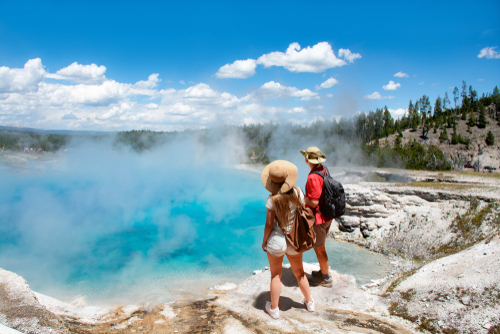
Couple,relaxing,and,enjoying,beautiful,view,of,gazer,on,vacation

Your safety is our highest priority when embarking on our Yellowstone National Park Tours. With its diverse wildlife and rugged terrain, being prepared and protected is essential for a memorable and secure exploration. Our guides play a critical role in ensuring your safety, equipped with essential tools and knowledge to handle potential risks and emergencies. Let’s take a closer look at the safety measures in place during Yellowstone tours to ensure a worry-free and enjoyable experience.

Bear Spray:

One of the most important safety measures taken during Yellowstone tours is the use of bear spray by our guides. As we delve into the park’s wilderness, encountering wildlife such as grizzly bears is a possibility. Our guides are trained in the proper use of bear spray as a deterrent, ready to protect us in case of a bear encounter.

Professional Driving and Wildlife Safety Courses:

Our guides have completed professional driving courses to safely navigate Yellowstone’s varying terrain. From winding mountain roads to rugged off-road trails, our guides are adept at handling different driving conditions, ensuring a smooth and secure tour experience for all of us. Additionally, our guides have undergone National Park Service (NPS) wildlife safety courses, educating them on responsible wildlife interactions and how to minimize risks and potential threats while exploring the park.

First Aid and Wilderness First Responder Certifications:

Our guides are equipped with first aid and Wilderness First Responder (WFR) certifications, ensuring your well-being is their top priority. In the event of an injury or medical emergency, our guides have the training and skills to provide immediate medical assistance and stabilize the situation until further help arrives.

Expert Backcountry Guides:

For those of us venturing into Yellowstone’s backcountry, our expert guides play a crucial role in setting up safe campsites that do not attract wildlife. With a deep understanding of backcountry safety protocols and wildlife behavior, our guides take necessary precautions to minimize the risk of wildlife encounters. From proper food storage to waste disposal, our guides ensure that your camping experiences are safe and harmonious in the wilderness.

Comprehensive Safety Protocols:

Beyond these specific safety measures, our tour operators in Yellowstone adhere to comprehensive safety protocols to safeguard your well-being throughout our tours. These protocols include thorough safety briefings, emergency communication plans, and strict adherence to park regulations and guidelines. Our guides also conduct regular risk assessments to identify potential hazards and proactively take measures to mitigate risks, ensuring a secure and enjoyable experience for all of us.

Summary

Your safety is our utmost priority during Yellowstone tours, and our guides play a crucial role in ensuring our well-being as we explore the park’s wonders. With bear spray at hand, professional training in driving and wildlife safety, first aid and WFR certifications, and expertise in backcountry camping safety, our guides are well-prepared to handle any situation that may arise. By following stringent safety measures and adhering to comprehensive safety protocols, our tour operators prioritize your safety, allowing us to immerse ourselves fully in the beauty of Yellowstone National Park without any worries.

Join us for an adventure of a lifetime here with Yellowstone Tour Guides, where your safety is our top priority! Our expert guides are equipped with all the essential tools and training to ensure your exploration of Yellowstone National Park is both thrilling and secure. From bear spray for wildlife encounters to professional driving skills on rugged terrain, our guides are prepared to handle any situation with confidence. Whether you’re trekking through the backcountry or enjoying scenic drives, rest assured that our comprehensive safety protocols are in place to safeguard your well-being. Embark on your Yellowstone adventure with peace of mind—contact us today!

Why 5 Million People Visit Yellowstone Park Annually

Why 5 Million People Visit Yellowstone Park Annually

Yellowstone Park has a wide variety of attractions that draw a lot of visitors. There are geysers, hot springs, a grand canyon, forests, and more, and our Yellowstone tour guides are here to help you find the best!

Old Faithful

Located in the Upper Geyser Basin, Old Faithful is the largest concentration of geysers and hot springs in the world. It’s also the park’s number one attraction and is a great reason to visit Yellowstone. Currently, Old Faithful erupts 20 times a day. Eruptions can be predicted within about a 10 minute variation based on prior eruption length and water discharge.

Mammoth Hot Springs

Mammoth Hot Springs is one of the many unique reasons why 5 million people visit Yellowstone Park annually. The travertine terraces at Mammoth Hot Springs have formed over thousands of years as hot water laden with calcium carbonate flows over them. Over two tons of carbonate are deposited in Mammoth every day! Additionally, Mammoth is both a town and a geological formation, providing a wealth of amenities including history, lodging, and restaurants. Mammoth is also a great place to see wildlife. You can often spot elk grazing in the area and in the fall, you can even witness the rut.

South Rim Trail – Artist Point

If you want to see one of the most awe-inspiring views in the park, head out on the South Rim Trail to Artist Point. It’s a great option for a Yellowstone vacation package. If the weather’s good, you may even be able to see a rainbow over the Lower Falls from Artist Point! During the summer, this hike gets extremely busy so it’s best to try and get up early to beat the crowds. The trail begins at Chittenden Bridge and ends at Artist Point. It’s a 1.9-mile round-trip.

Wildlife

Yellowstone Park is home to a unique mix of geothermal features and wildlife. It holds half of the world’s geysers, mud pots, hot springs and steaming fumaroles. The park also boasts a variety of grizzly bears, wolves, coyotes, elk and bison. Visitors can catch a glimpse of these magnificent creatures while traveling through the park, and some animals are easier to see than others.

Mud Volcano

Mud volcanoes occur where layers of water-saturated clay rocks in the Earth’s interior are under pressure from above, driven upward by nearby gas. They are usually small, just a few inches or meters tall. The mud volcano in Yellowstone Park is unique because it has enough acidity to destroy stone, creating bubbling mud pools and spitting hot springs. This area also has one of the most powerful odors in all of Yellowstone, thanks to hydrogen sulfide gas that escapes from the ground here atop a resurgent dome within the magma chamber of the Yellowstone Caldera. Contact us to start planning your next adventure now!

Things To Know And See Your First Time At Yellowstone

Things To Know And See Your First Time At Yellowstone

The park is a very popular tourist destination and can get very busy, especially during the spring and fall months. During these times, it is very important to take your time and enjoy the scenery. If you’re planning your first time at Yellowstone, there are a few things you should know. These tips will ensure your trip is both safe and fun.

The Grand Prismatic Spring

The Grand Prismatic Spring is the most famous hot spring in Yellowstone, and it’s one of the park’s most popular attractions. At 370 feet in diameter, it’s bigger than a football field and the third-largest spring on Earth. The water is incredibly hot (it’s up to 189 degrees Fahrenheit) and bubbles up in a circle around the center of the spring. The ring of hot water gradually cools as it spreads out across the spring’s massive surface, creating bands of distinct temperatures around each side. These colors are the result of billions of microbes and minerals in the water, as well as sunlight being scattered by mineral particles. The bacteria thrive in the warmer waters and create a rainbow of vibrant colors, with dazzling bright yellows, fierce oranges and deep reds only appearing near the edges of the spring. You can see this incredible rainbow from the boardwalk in the Midway Geyser Basin, but it’s worth a short hike up to the overlook for an even better view. The trail starts at Fairy Falls and climbs 105 feet above Midway Lake.

Old Faithful

If you’re visiting Yellowstone for the first time, then Old Faithful is likely at the top of your to-do list. But, with so many visitors coming to see the world-famous geyser every year, getting the best view can be tough. However, there are a few things you can do to ensure you have a memorable eruption viewing experience. As a rule, it’s best to visit in the shoulder seasons (September or October) when crowds are less likely. Also, avoid times between noon and 6 p.m. when bus tours and visitors are expected to arrive, if you’d like a more intimate experience with the erupting geyser all to yourself. Another thing that’s often overlooked when visiting Yellowstone is the wildlife that lives around and on top of the geyser. Thousands of animals (including bison, elk, mule deer, pronghorn antelope and even birds) call Yellowstone home.

Yellowstone Lake

There are a lot of things to know and see when visiting Yellowstone for the first time. It’s important to understand the basics and plan ahead to make the most of your trip! One of the most popular activities at Yellowstone is exploring the 136-square-mile Yellowstone Lake. It’s the largest high-elevation lake in North America and is home to many thermal features. It’s also a great place to get out of the crowds and view more wildlife. There are a variety of options for boat tours, fishing, and kayaking on the lake. It’s also important to remember that Yellowstone is constantly changing. This means that you won’t be seeing the same thermal features you saw last year!

The Mammoth Hot Springs

Mammoth Hot Springs, one of Yellowstone’s most stunning attractions, is a geothermal site known for its travertine terraces. They are unlike any other thermal feature in the park. These unique formations are a result of a geothermal system that is connected to an ancient volcano. The Mammoth Hot Springs are made up of limestone, a type of rock that is more soft than other types of rock. The water that comes out of the Mammoth Hot Springs is heated by a partially molten magma chamber deep underground, which radiates heat to the earth’s surface. A few springs in the Mammoth Hot Springs area are active. The Liberty Cap, a 37-foot-high cone that’s unique to the Mammoth Hot Springs, is a spectacular sight. And if you are going to visit Mammoth Hot Springs, make sure you stop by the Lower Terrace boardwalk. This trail connects a number of the most spectacular Mammoth Hot Springs, including New Highland Terrace, Prospect Terrace, Orange Spring Mound, Snow Pond, Bath Lake, White Elephant Back Terrace and Angel Terrace.

Springtime Attractions At Yellowstone Park

Springtime Attractions At Yellowstone Park

When you visit Yellowstone in spring, it’s a great time to see a lot of wildlife that’s ready to get out into the fresh air. And of course, no trip to Yellowstone is complete without watching a geyser erupt, and Old Faithful is one of the most popular ones. But there are plenty of other unique things to do in the park that will make your trip more memorable.

1. Go For A Quiet Walk

A quiet walk in Yellowstone is the perfect way to unwind and soak in the natural wonders of the park. The park’s trails are full of hidden gems from bubbling mud pots to exploding geysers and roaring waterfalls. A walk along a boardwalk loop is a great way to see the colorful hot springs in the park. But it can also be a bit crowded, especially in the summer. If you’re looking for a quieter alternative, consider the Beaver Ponds Trail. This 5-mile loop will take you through sagebrush, forest stands and beaver ponds.

2. The Scenic Drive

If you’re short on time, a scenic drive is the perfect option for seeing Yellowstone Park. It will give you a chance to see most of the major attractions in just one day. Probably the most famous landmark in Yellowstone is the Grand Prismatic Spring, which you can see in lots of postcards. While it’s impossible to see the same rainbow of colors in real life, you will still be blown away by the size and uniqueness of this famous landmark! It’s also one of the best places in the park to see wildlife. You’ll often see grizzly bears, gray wolves, bison, and elk.

3. Watch A Geyser

If you’re a nature buff, you’ll want to take some time to watch a geyser at Yellowstone Park. The area is home to hundreds of these hydrothermal features, a result of the huge volcano under the park’s surface. What makes geysers so interesting is that they erupt when water escaping from cracks in the Earth’s crust pools up with groundwater and super-heats, forcing it to spew out of a vent. That’s why they are a popular attraction for scientists. While Old Faithful is Yellowstone’s most famous geyser, there are many other hydrothermal features that you can see from the park’s boardwalks and paved trails. The park even predicts eruption times for some of these features, so be sure to keep an eye out for them!

4. Hiking

A great way to get some exercise and see some of the most impressive scenery in Yellowstone Park is by taking a hike. The park has hundreds of hiking trails, so you can find something for everyone. Spring is the best time of year to hike, as temperatures are still quite cool and there isn’t much snow on the ground. Fall is also a good time to hike, but be sure to check the weather forecast before heading out! For a scenic and relatively short hike, try the Storm Point Trail near Yellowstone Lake. It’s a popular trail that leads to an overlook of the Grand Prismatic Spring and Excelsior Geyser, which is one of the most-photographed thermal features in Yellowstone.

5. Visit A Hot Spring

Springtime is the best time to visit some of Yellowstone’s stunning hydrothermal features, such as geysers and hot springs. The fewer crowds mean that you’ll get an even closer look at these incredible natural wonders. The water that makes up these springs is heated by magma deep beneath the Earth’s surface, and it flows upward to the surface through cracks or faults in the ground. This creates underground pressure that forces the water to rise to the surface faster than it would normally. While visiting these hot springs, be sure to keep in mind that it’s illegal and dangerous to enter them. Some people don’t realize this, and they’ve accidentally stepped into a hot spring or geyser and suffered burns.